
2025 Milestones in ASEAN Carbon Market Unification: A Year of ASEAN Common Carbon Framework (ACCF) Progress
Understanding the ASEAN Common Carbon Framework (ACCF)
Launched under Malaysia’s ASEAN Chairmanship and backed by the ASEAN-UK Green Transition Fund under the ASEAN Strategy for Carbon Neutrality, the ACCF is a multi-stakeholder initiative involving five founding signatories: MCMA (Malaysia), AACM, IDCTA (Indonesia), SSFA (Singapore), and TCMC (Thailand). Through aligned standards, interoperable infrastructure and a shared ambition, the ACCF seeks to enable high-integrity carbon credits, scale investment, and lower costs for market participants.
At its core, the ACCF pursues four interlinked objectives:
- Develop a vibrant voluntary carbon market ecosystem across ASEAN, particularly through high-quality nature-based and technological solutions.
- Support national policy frameworks so that compliance and voluntary markets work equitably toward net‑zero goals.
- Build human and institutional capacity–raising the professionalism, knowledge and competency of carbon‑market actors.
- Foster regional and international collaboration–enabling interoperable markets, efficient pricing, and stronger flows of climate finance.
The ACCF’s design draws on key elements such as ASEAN‑specific methodologies, recognition of national crediting systems across borders, shared MRV/verification platforms, and linkage to international emission‑trading mechanisms (including Article 6 of the Paris Agreement). It is structured around three core Workstreams—Supply & Demand, Market Infrastructure, and Strategic Communications—supported by two cross-cutting Catalysts: Pilot Projects and Policy/Regulatory Alignment.
With this foundation, ASEAN aims to move from a fragmented patchwork of rules toward a unified market architecture capable of delivering climate impact, investor confidence and regional economic value.
In 2025, the ACCF made significant strides toward operationalising a regionally aligned, high-integrity carbon market ecosystem. Over the course of four Steering Committee meetings, ASEAN member states and stakeholders advanced a shared governance structure, initiated a voluntary endorsement pathway for pilots, and built consensus on regional deliverables for ASEAN Ministerial and COP30 recognition. By year-end, the ACCF had finalised technical outputs including an updated roadmap, a harmonised Article 6 pilot pipeline, and a regional baseline alignment study—all while securing its first formal mention in an ASEAN Environment Ministers Joint Statement. These developments signal growing political will and private sector readiness to build an interoperable carbon architecture tailored to ASEAN needs and connected to global climate finance.
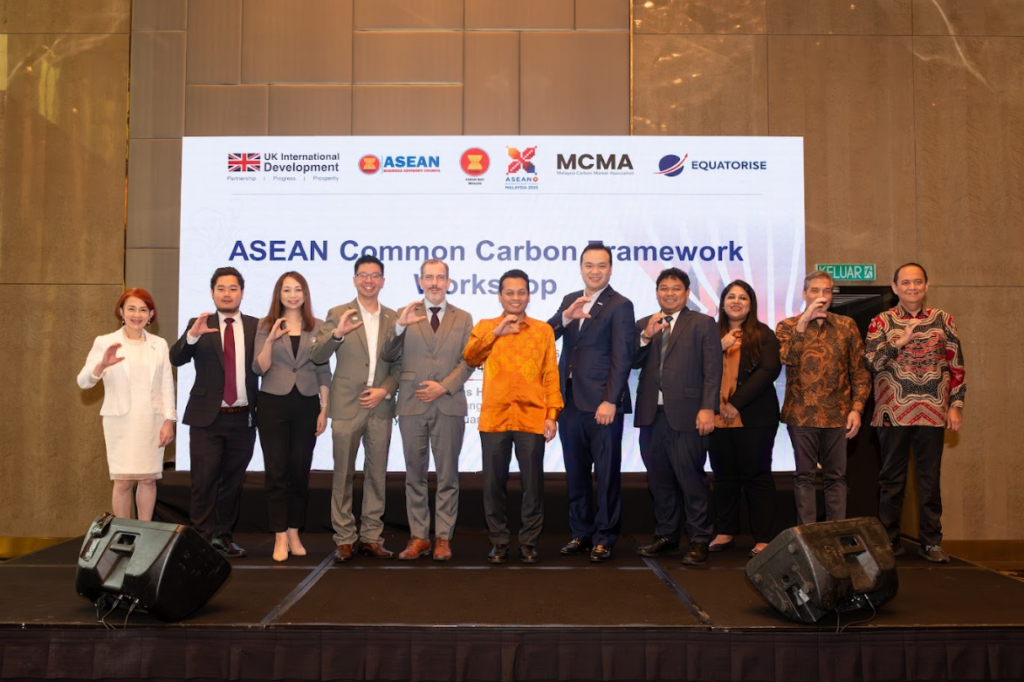
Q1: Establishing Governance and Workstreams for Alignment (Kuala Lumpur, 20 March 2025)
The first Steering Committee was launched with a landmark workshop attended by ministers, UK and ASEAN representatives, and private sector leaders.
- Governance adoption: formalisation of the SteerCo structure, rotation of chairmanship (starting with Malaysia), and deliverable‑led workstream governance with a dedicated Project Management Office (PMO).
- Workstreams activated:
- Workstream A (Supply & Demand): Focus on ASEAN claims guidance, mapping of crediting methodologies, alignment with Article 6, blended‑finance models.
- Workstream B (Market Infrastructure): Addressing exchange interoperability and legal/regulatory inconsistencies, initial proposals from carbon‑exchange platforms to explore blockchain‑based infrastructure.
- Workstream C (Strategic Communications & Capacity): Calendar of regional trainings, ecosystem mapping, and knowledge‑sharing platforms.
- Pilot Projects Catalyst: criteria set for pilot selection to demonstrate Article 6 alignment, high‑integrity supply, and mutual recognition.
- Endorsement roadmap: Concept note prepared for submission to the ASEAN Business Advisory Council in May.
- UK commitment: The United Kingdom reaffirmed its support through technical and policy inputs.
Q2: Operationalising the Endorsement Pathway and Scaling Pilot Pipelines (Singapore, 5 May 2025)
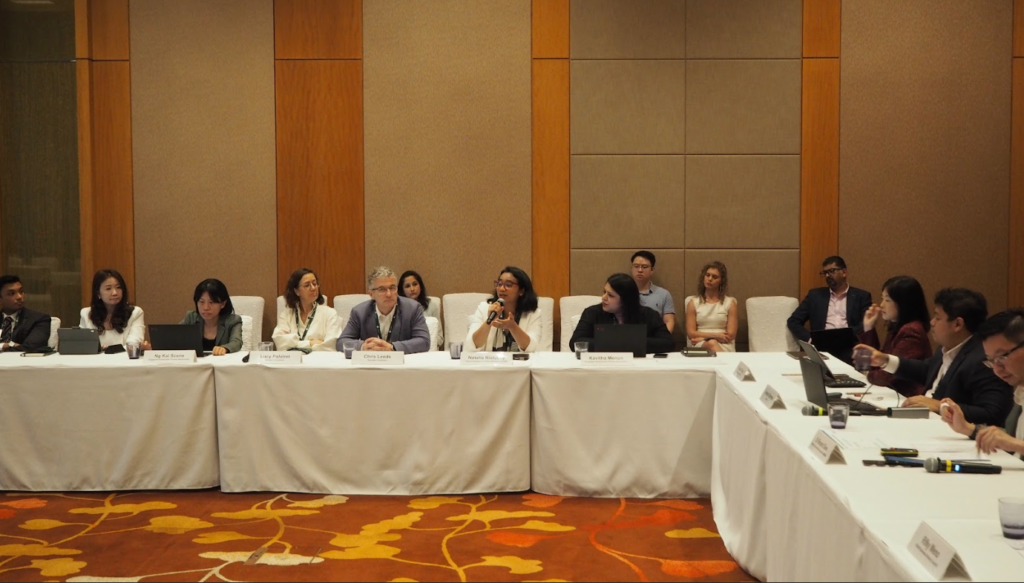
Held during Ecosperity Week, the second Steering Committee focused on preparing ACCF’s path to regional endorsement and showcasing viable deliverables for COP30.
- Institutional strategy: A pragmatic dual‑track approach (economic + environmental) was agreed for endorsement by ASEAN bodies. A non‑binding framework is being targeted for October 2025, with Malaysia’s NRES leading the charge.
- Pilot pipeline: Four project types proposed (peatland, forest conservation, blue carbon, CCS/CCUS), with a readiness scorecard introduced to evaluate pilot maturity, claims robustness and financing potential.
- Mutual Recognition (MR): First steps taken to launch an ASEAN Methodology Library to map national crediting schemes and enable technical dialogue on MRAs.
- ERIA Study: A regional roadmap is being developed (via Economic Research Institute for ASEAN and East Asia) to guide VCM infrastructure, regulatory harmonisation and Article 6 readiness.
- Strategic outputs for COP30: Drafting of an exchange MoC (between IDX, SET, SGX), launch of the MR methodology library, and a regional claims guidance survey led by the Singapore Sustainability Academy (SSFA).
Q3: Aligning Regional Deliverables for ASEAN Ministerial Endorsement (Bangkok, 8 July 2025)
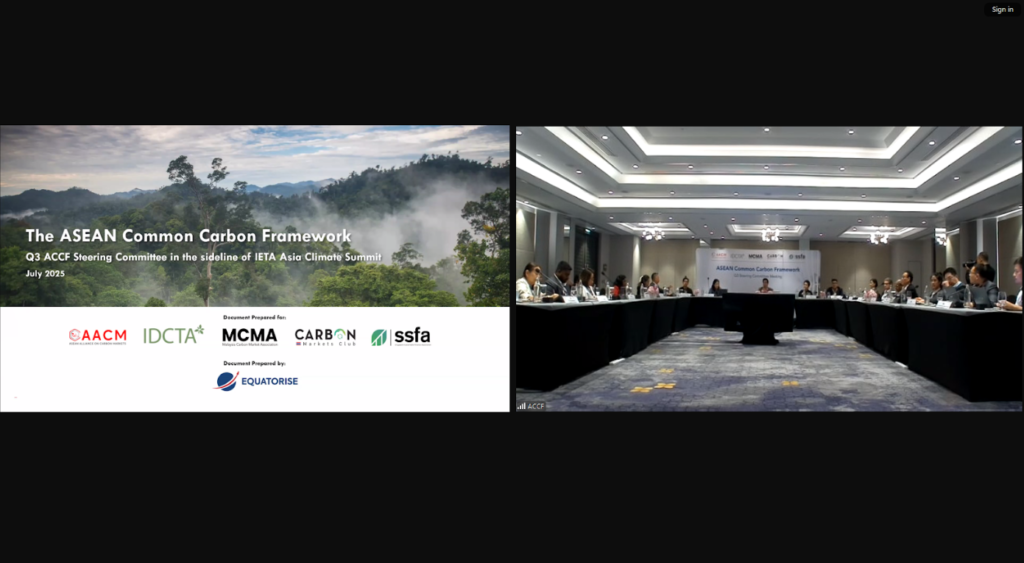
Coinciding with the Asia Climate Summit, the Q3 SteerCo sharpened its focus on tangible deliverables and fundraising strategies.
- COP30‑ready deliverables prioritised:
- Launch of ACCF pilot projects.
- Signing of a Coalition Statement to grow ASEAN carbon markets.
- The ASEAN Methodology Portal was developed by Fairatmos (hosted on the ASEAN BAC Climate Platform).
- Funding strategy: Workstreams reprioritised to match donor interests; proposed phased, outcome‑oriented donor engagement plan.
- Pilot criteria finalised, integrating alignment with the Integrity Council for the Voluntary Carbon Market (ICVCM) Core Carbon Principles, Carbon Offsetting and Reduction Scheme for International Aviation (CORSIA) eligibility and Article 6.2.
- Claims Guidance: SSFA completed a regional survey and appointed a knowledge partner to deliver a guidance framework on carbon claims.
- Strategic Communications: The Thai Carbon Market Club launched a regional verifier‑training initiative and hosted a capacity‑building workshop.
Q4: Showcasing Progress and Locking in ASEAN-level Political Signals (Kuala Lumpur, 14 October 2025)

Held in conjunction with the third Malaysia Carbon Market Forum (MCMF), the final Steering Committee of 2025 marked the ACCF’s “report‑card” moment, consolidating progress ahead of COP30 and setting direction for 2026–2027.
- Pilot Readiness: Five project archetypes profiled (2 peatlands, forest, blue carbon, CCUS). Clear launch pathways mapped, emphasising high‑integrity, ICVCM‑ready and regionally interoperable pilots.
- ASEAN Endorsement: The ASEAN Economic Ministers Joint Statement formally referenced the ACCF for the first time—a major milestone in gaining regional political traction.
- COP30 Strategy: Confirmed launch of pilots, the MRA statement, and ASEAN Methodology Portal at Belém, Brazil. Regional communications and donor briefings aligned for maximum visibility.
- 2026 Priorities:
- Scale Article 6.2 pilots and work toward mutual recognition.
- Embed ACCF in the regional carbon‑market integration roadmap under future Philippines and Singapore chairmanships.
- Strengthen market integrity via capacity building, verification harmonisation and buyer‑seller matchmaking.
Looking Ahead: 2026 and Beyond
As ASEAN positions itself as a credible and connected region for carbon finance, the ACCF has now laid a robust foundation. In 2026, the focus will shift toward scaling Article 6‑aligned pilots, deepening ASEAN governmental engagement, and expanding market interoperability.
We extend our sincere thanks to all Steering Committee members, regional champions, and development partners–especially the UK’s ASEAN‑UK Green Transition Fund, Fairatmos, BloombergNEF, ERIA, and Abatable–for making 2025 a transformative year.