
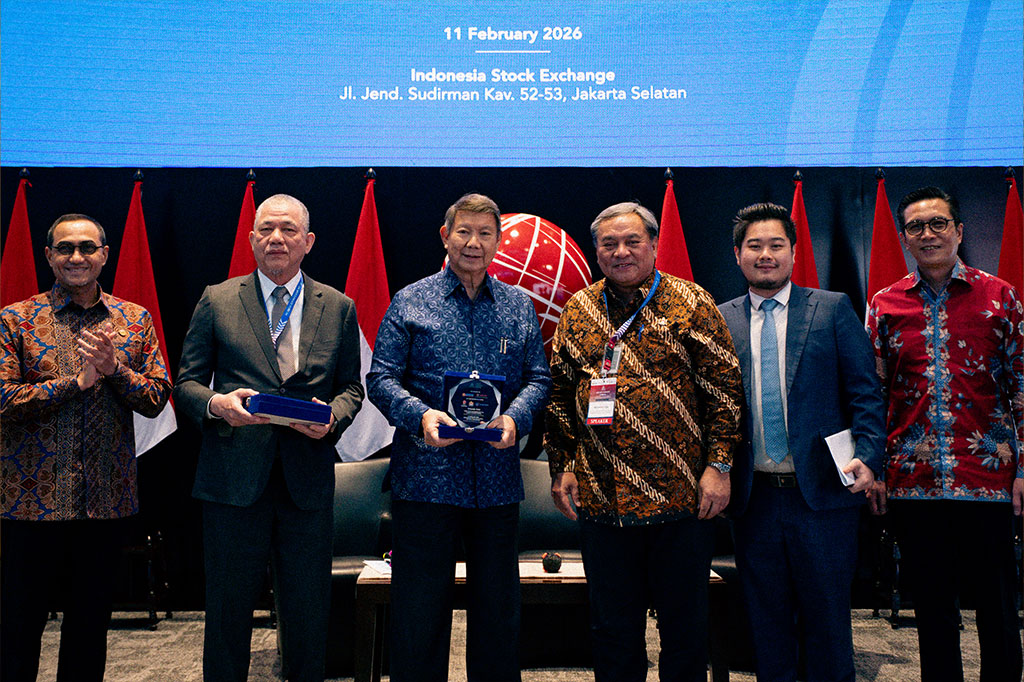
ASEAN Climate Forum Fosters Regional Coordination to Accelerate Climate Delivery and Investment Readiness
The 3rd Annual ASEAN Climate Forum (ACF) convened senior policymakers, business leaders, financiers, and regional institutions in Jakarta (11/02), reinforcing ASEAN’s collective push to move from climate ambition to implementation. Hosted at the Indonesia Stock Exchange, the forum was co-hosted by the ASEAN Business Advisory Council (ASEAN-BAC) and the ASEAN Alliance on Carbon Markets (AACM), in collaboration with Indonesia Stock Exchange (IDX), Kadin Indonesia, and Equatorise Advisory.
Taking place in the aftermath of COP30 and amid rising climate and energy risks across Southeast Asia, the forum underscored ASEAN’s dual reality: high climate vulnerability alongside vast renewable energy and critical mineral potential. With ASEAN’s climate finance needs projected to reach US$422 billion by 2030, discussions focused on strengthening governance, mobilising finance, and coordinating regional delivery at scale.
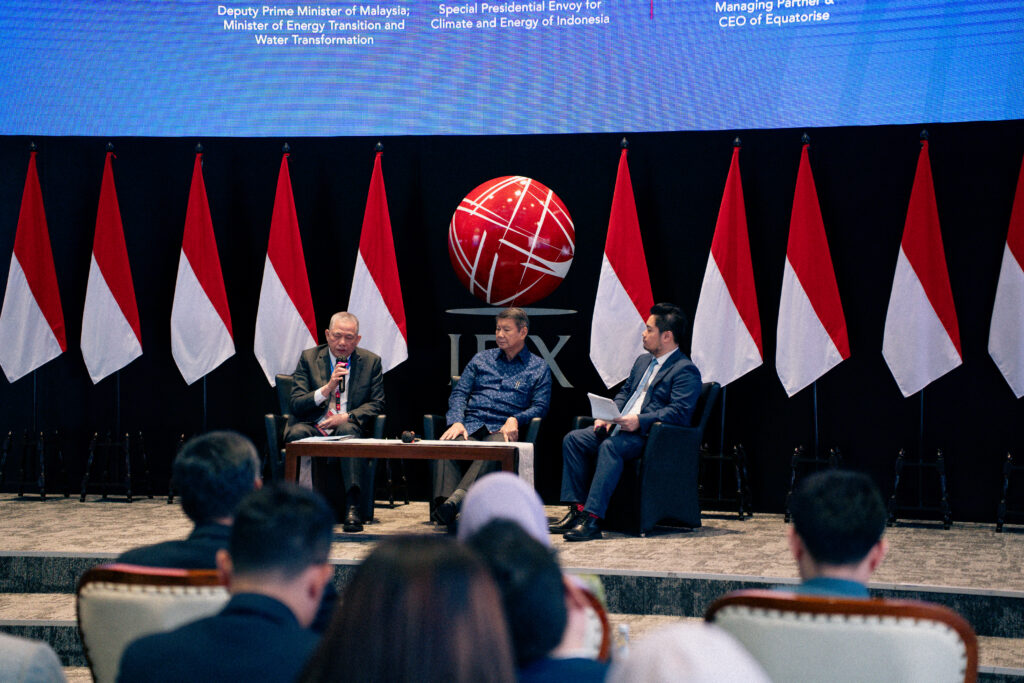
During the panel session on ASEAN Climate Diplomacy, H.E. Hashim Djojohadikusumo, Special Presidential Envoy for Climate and Energy of the Republic of Indonesia, shared,
“The government has achieved a few things, one of them was the Presidential Regulation No. 110 of 2025. It supports transparency and internationalises our Indonesian carbon market by acknowledging and approving the presence of the verifiers such as Vera, Gold Standard and some of the others.”
He further emphasised, “Investors are still enthusiastic despite the turbulence that happened in our stock market. However, we can only have high integrity carbon markets when you have trust and credibility. The Indonesian government is determined to ensure the credibility of the market.”
In the same session, YAB Datuk Amar Haji Fadillah bin Haji Yusof, Deputy Prime Minister of Malaysia and Minister of Energy Transition and Water Transformation, emphasised that deeper regional energy integration will require stronger digitalisation and the deployment of smart grid systems to enable cross-border electricity interconnections. He noted that enhanced coordination in managing regional power systems will be essential for ASEAN to position itself as a future regional energy hub and potentially a “battery of the world.”
As a key collaborator of today’s event, Jeffrey Hendrik, Interim President Director of Indonesia Stock Exchange (IDX), underscored the Exchange’s role in supporting corporate decarbonisation and green financing.
“We recognise that decarbonisation is a journey for companies. That is why IDX is present with programmes, products, and initiatives that help our listed companies begin and continue their decarbonisation process. This will in turn encourage green financing, and we hope IDX can play a meaningful role in supporting Indonesia’s net-zero target,” he said.
Bernardino Vega, Secretary of ASEAN-BAC and Vice Chair of International Affairs at KADIN Indonesia, emphasised,
“ASEAN stands at a critical juncture where the opportunity and the gap are both real. The task before us is to move from signals and statements into practical pathways and implementable pipelines, where finance, governance, and execution come together.”
Steven Marcelino, Deputy Chair for International Affairs at AACM and Managing Partner & CEO of Equatorise Advisory, shared,
“The ASEAN Alliance on Carbon Markets through ASEAN Climate Forum is s here not only to contribute to this dialogue but also to amplify the collective voice of ASEAN in the global climate discussion. Over the past few years, we have helped inspire the establishment of the Malaysia Carbon Market Association (MCMA) and are now actively supporting the Philippines’ Carbon PH coalition. We also work closely with partners in Singapore and across ASEAN. Our focus is to deepen regional and national collaboration, working alongside ambitious policymakers to scale young carbon markets and support the development of compliance markets in ASEAN.”
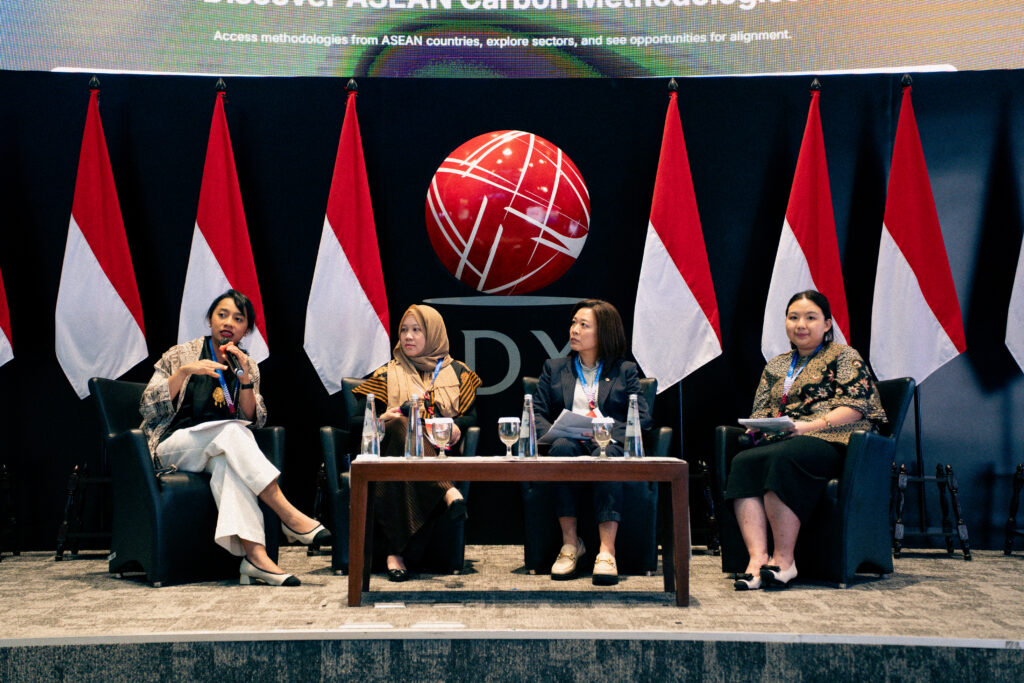
Another panel session on The Future of Cross-Border Climate Initiatives in ASEAN brought together regional leaders advancing flagship initiatives such as the ASEAN Power Grid (APG), the ASEAN Net Zero Hub, and the ASEAN Common Carbon Framework (ACCF). The discussion highlighted how these cross-border platforms are enabling energy transition, corporate decarbonisation, and carbon market development across the ASEAN Economic Community. Speakers underscored the need for stronger regional coordination, policy alignment, and private sector engagement to ensure that climate ambition translates into implementable, investment-ready projects at scale.
The forum featured participation from senior regional and national leaders, including Hasan Fawzi, Interim Chief Executive of Capital Market, Financial Derivative and Carbon Exchange Supervision at the Indonesian Financial Services Authority (OJK); Francis Edralin Lim, Chair of the ASEAN Capital Markets Forum and Chairperson of the Securities and Exchange Commission (SEC) Philippines; H.E. Satvinder Singh, Deputy Secretary-General of ASEAN for the ASEAN Economic Community and other senior representatives from ASEAN institutions, regulators, and the private sector.
Building on the achievements of ACF 2023 and 2024, this year’s forum strengthens discussions on cross-border climate initiatives, carbon market cooperation, and the role of the private sector in enhancing market readiness and investment viability. The forum underscores ASEAN’s commitment to positioning climate action as a driver of sustainable and integrated economic growth.