
Industry Welcomes Permenhut 6/2026: A New Milestone for Clarity in Indonesia’s Carbon Market
Jakarta, 24 April 2026 – Indonesia’s carbon market has received a fresh wave of optimism following the issuance of Ministry of Forestry Regulation (Permenhut) Number 6 of 2026. The regulation is widely regarded as a key instrument that provides clarity and stability for businesses looking to accelerate carbon projects across the country.
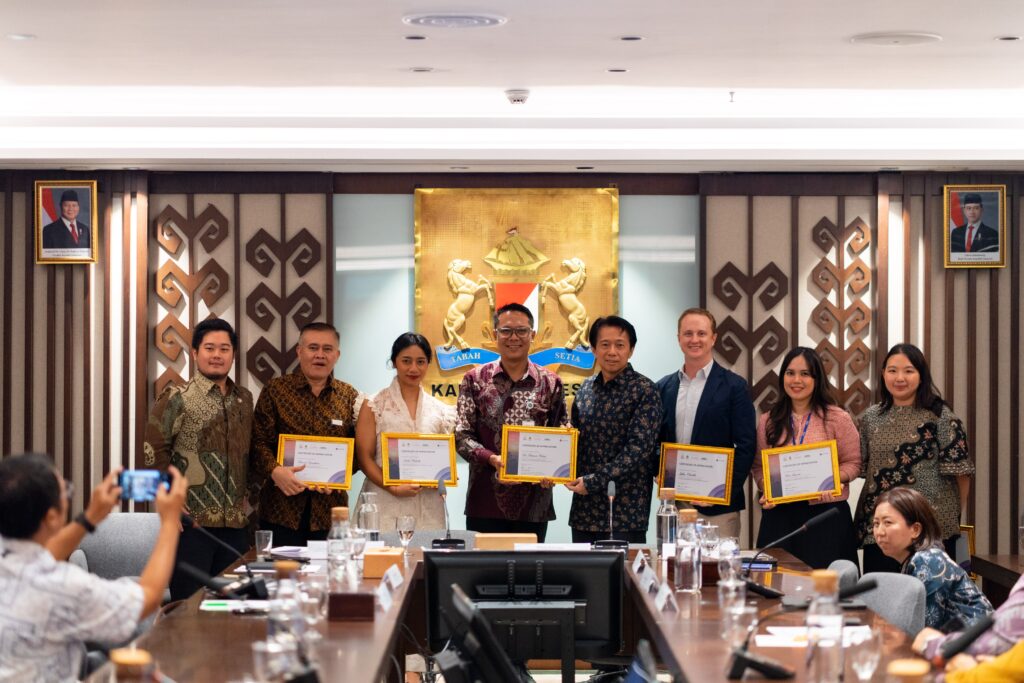
At a dialogue forum titled “Decoding Permenhut 6/2026: Implications for Indonesia’s Carbon Market” held in Jakarta on 21 April, stakeholders comprising government representatives, the Indonesian Chamber of Commerce and Industry (Kadin Indonesia), and carbon project developers gathered to examine the new direction of the nation’s green economy.
The Senior Advisor to the Minister of Forestry, Edo Mahendra, explained that the regulation is built around three core principles: implementing Presidential Regulation 110/2025, providing certainty for the continuity of carbon projects, and balancing environmental targets — specifically the FOLU Net Sink and NDC goals — with new economic growth opportunities.
“We at the Ministry of Forestry are ensuring that Indonesia stands at the forefront of the global carbon market, not merely as a follower. We will fulfil all the necessary components to establish Indonesia’s credibility on the world stage,” said Edo.
Shinta Kamdani, Coordinating Deputy Chairperson of Kadin Indonesia, emphasised that the success of the carbon market hinges not only on written regulations, but on trust and inter-party coordination.
“Close cooperation between the government, project developers, and financial institutions is essential for the transition toward on-the-ground implementation,” she said.
Echoing this view, Dharsono Hartono, Deputy Chairperson for Environment at Kadin Indonesia, described the regulation as an important milestone in strengthening the architecture of the national carbon market.
“As Southeast Asia’s largest economy, this policy has significant implications for regional and international market confidence,” he said.
The panel discussion at the event highlighted several critical points addressed in Permenhut 6/2026, including clarity on which parties qualify as project proponents and the procedures for issuing forestry carbon credits. Also discussed were the mechanisms for participation in international markets — including Corresponding Adjustments — as well as environmental and social safeguard mechanisms and dispute resolution processes to uphold market integrity.
Industry players also provided important input regarding the need for further implementing regulations. The issue of project risk management — including the potential revocation of project approvals — emerged as a key concern in ensuring long-term investment security.
The private sector’s enthusiasm for the regulation is expected to attract a larger flow of green investment. Steven Marcelino of AACM expressed hope that other ministries would follow the Ministry of Forestry’s lead in drafting regulations accompanied by measurable minimum targets.
“I am confident that the private sector’s enthusiasm for this regulation will attract more investment,” said Steven.
The dialogue concluded with a shared understanding that sustained collaboration between government and industry is the primary foundation for building a domestic carbon market ecosystem that is credible, effective, and internationally competitive.
This is an unofficial English translation of the original Bahasa Indonesia press release published at the official website of the Indonesian Ministry of Forestry (kehutanan.go.id).